
News

This guide compares CPAP masks on parameters including warranty, available sizes, intentional leak, pressure range, and headgear.
Read More
A newly released light therapy device delivers up to 10,000 lux of UV-free light to help users establish morning routines during darker seasons.
Read More
The American Academy of Sleep Medicine commends the House Energy and Commerce Subcommittee on Health for convening its Sept. 15 legislative hearing, “Examining Legislative Proposals to Reform Medicare Provider Payment an...
Read More
The growing network aims to expand patient access to local, trained providers of oral appliance therapy for obstructive sleep apnea.
Read More
The BREATHE study will evaluate the long-term safety and effectiveness of the bilateral hypoglossal nerve stimulation therapy in adults with moderate to severe obstructive sleep apnea.
Read More
The FDA has granted 510(k) clearance to an intraoral biosensor that combines an oral appliance with a built-in pulse oximeter to treat sleep-disordered breathing while continuously tracking blood oxygen saturation.
Read More
An Orlando-based inventor has developed an adjustable bedside solution designed to address common patient frustrations with equipment organization and accessibility.
Read More
The FDA has classified the recall of over 20,000 Luna G3 APAP devices as Class I due to a firmware defect that can cause unexpected shutdowns and interruptions in therapy. Users are advised to check their firmware versio...
Read More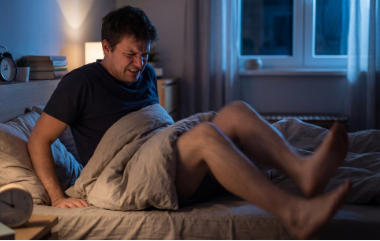
Leg discomfort at night can make it hard to fall asleep or get back to sleep. But not every strange or painful feeling in the legs has the same cause. Restless legs syndrome and leg cramps can both affect sleep, but they...
Read More
A newly approved oral treatment targets the underlying orexin deficiency in narcolepsy type 1, marking a shift from symptom management to mechanism-driven care across multiple international markets.
Read More